Reading and written expression
Students build comprehension, vocabulary, handwriting, grammar, and clear written communication across grade levels.
 Academics
Students build habits in reading, handwriting, reasoning, attention, and character before teachers introduce technology to support the lesson.
Foundational habits lead to stronger math, science, writing, problem solving, and readiness for the next academic step.
Students build comprehension, vocabulary, handwriting, grammar, and clear written communication across grade levels.
Teachers can see how students approach a problem, where they hesitate, and when they are ready for the next step.
Students build number sense, math facts, reasoning, analytical thinking, and confidence for advanced work.
See what students work on from early childhood through middle school.
Small classrooms introduce school routines, language, early reading habits, number sense, fine-motor work, art, music, movement, and social practice.
Half-day classroom routines for two-year-olds: play, language, listening, sharing, songs, stories, colors, and simple counting
Early writing motions, letter exposure, colors, shapes, classroom independence, and social confidence
Pre-reading, seasons, days, months, number sense, problem-solving language, art, music, and movement
Full-day kindergarten with early reading, sentence work, handwriting, counting, number relationships, library, art, music, and PE.
Our elementary school program builds foundational reading fluency, handwriting, spelling, paragraph writing, math facts, multi-digit operations, science labs, Wax Museum research, 3D design, library, PE, art, and music.
Phonics, reading fluency, handwriting, spelling, math facts, observation, and classroom habits.
Multiplication, division, paragraph composition, SCISA Master Teacher Tanya Allen's math focus, and STEAM Market Day.
Led by SCISA Master Teacher Allison Clark, fifth graders anchor our elementary school program with advanced math, science inquiry, and student leadership.
Students participate in Elementary Beta Club, competitive Math Team, fine arts, and SCISA STEAM challenges.
Research papers, literature, grammar, upper math (Algebra and Geometry), science labs, world history and geography, competitive math team, Junior Beta Club, NJHS, and high school prep.
Students read literature, write research papers, and study culture, economics, politics, and geography.
Students master Algebra, Geometry, and laboratory sciences under Mrs. Sutherland, Mrs. Burnett, and Mr. Havird.
Spanish and French build vocabulary and cultural appreciation, complemented by visual and performing arts.
National Junior Honor Society, Junior Beta Club, SCISA Math Meet, and athletic teams build teamwork and character.
Timmerman math teams compete with distinction in the South Carolina Independent School Association (SCISA) Math Meet.
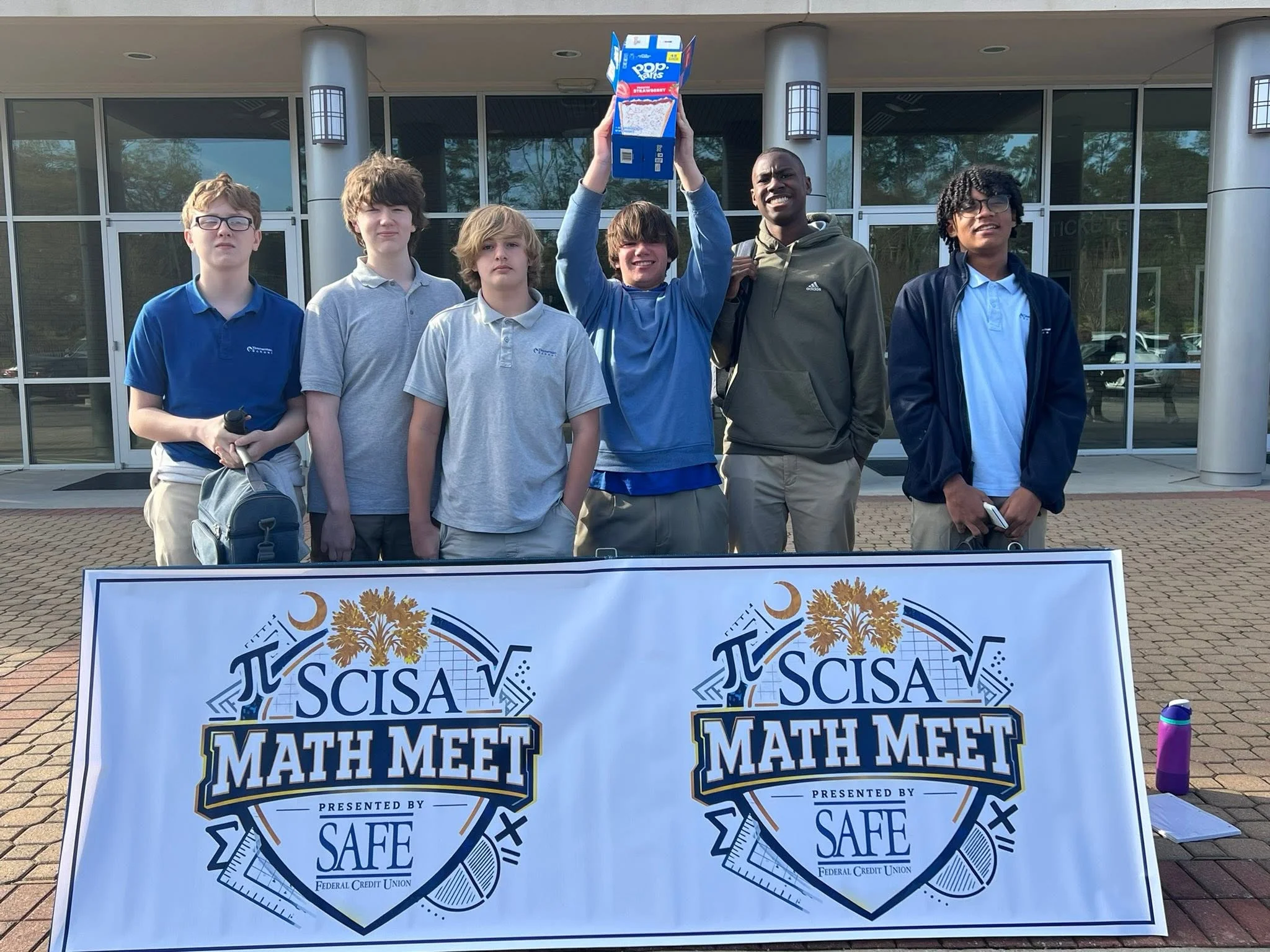
Our middle school math team earned 2nd place overall in our SCISA division! Angelo Morris earned 3rd place overall and was our top scorer. Liam Palyok took 5th place overall.
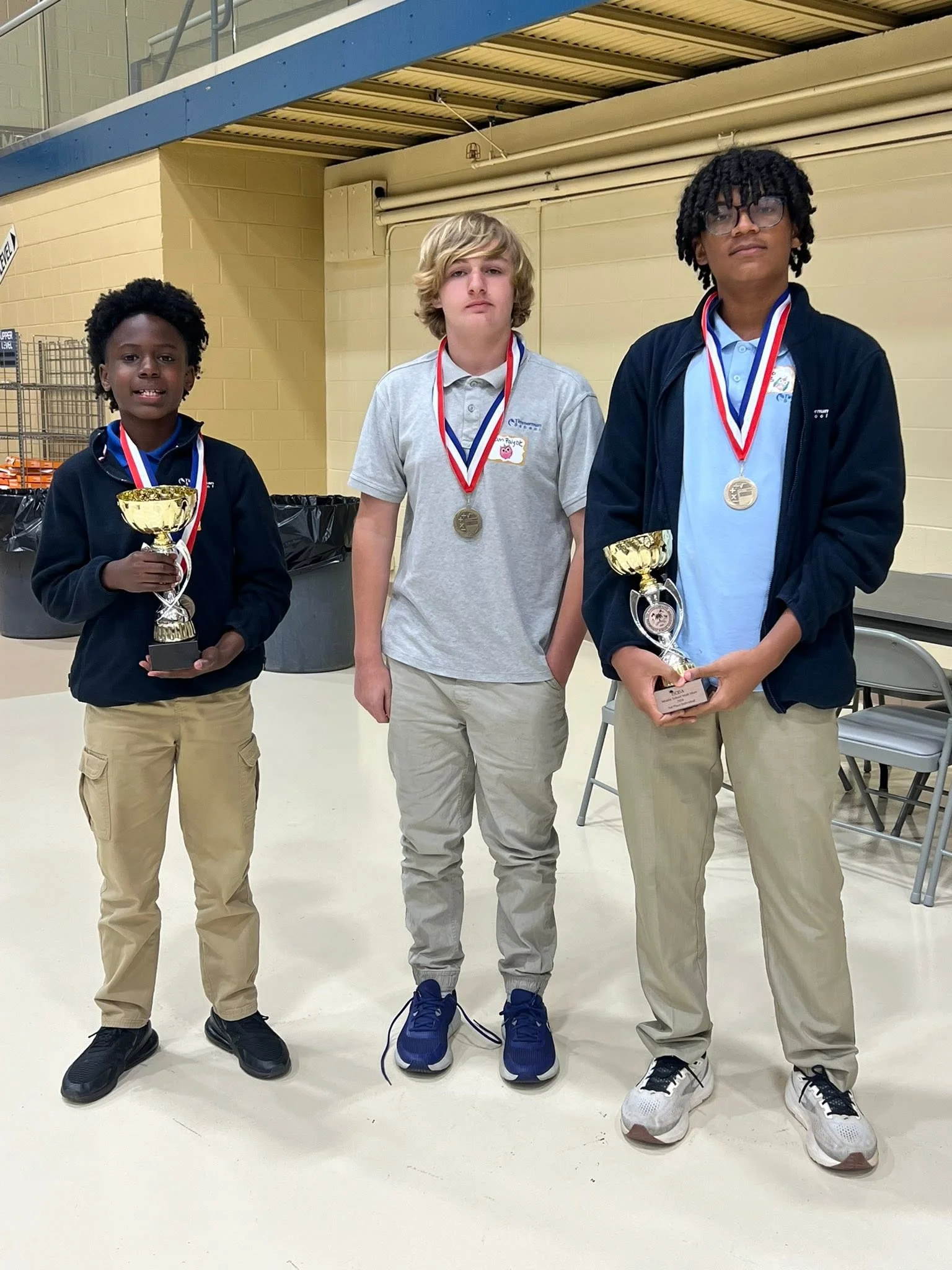
Individual trophy winners celebrated top placements across both elementary and middle school divisions, representing Timmerman's tradition of rigorous math reasoning.
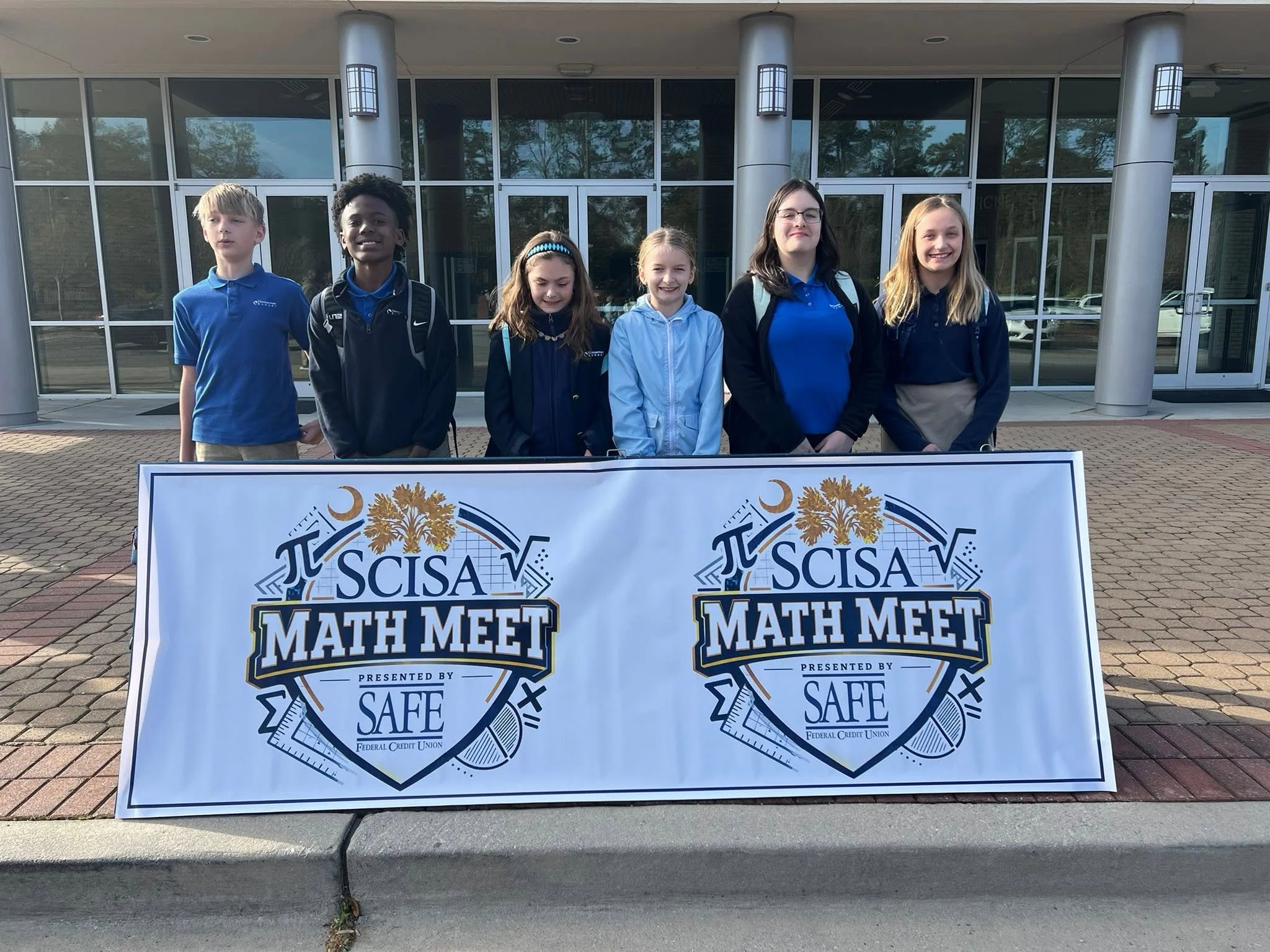
Our lower school elementary math team placed 4th overall in their division. Joshua Martin took 2nd place overall and was our lower school top scorer.
Students build attention by reading closely, writing by hand, listening, speaking, remembering, and solving problems.
Handwriting, cursive, sentence work, and written expression build memory, attention, fine-motor control, and clear thought.
Students build comprehension and vocabulary through sustained reading before they use search tools or summaries.
Students practice math facts and show their reasoning before using calculators or answer tools.
Small-school attention lets teachers see effort, confusion, growth, habits, and conduct in ways a screen cannot.
Students use modern tools after they have built the attention, handwriting, reading, reasoning, and classroom habits that make those tools useful: close reading, written work, factual recall, and independent judgment.
The curriculum gives families a clear view of the work students complete in each subject.
Reading habits, vocabulary, library time, and comprehension from early grades through middle school
Sentence work, grammar, handwriting, cursive, written expression, and research papers as students mature
Number sense, math facts, problem solving, analytical thinking, math team strength, and readiness for advanced work
Hands-on investigation, observation, evidence, and laboratory habits. Specialized STEM work is covered on the Programs page.
Students study people, places, societies, maps, stories, and civic life.
Daily routines teach respect, manners, effort, service, school pride, and the social habits students carry forward.